Rome Diana Artemis goddess medallion CB-66 (2) €29.87 Medallion inspired by Diana Artemis, goddess of hunting and protector of animals and unexplored lands. With time she also assumed the role of goddess of the moon and of chastity. Piece made of bronze. Diameter 43mm. View
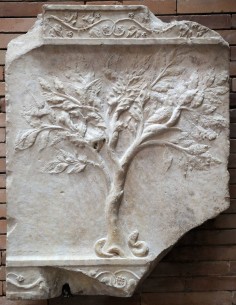
Rome Tree of life pendant CB-86 (2) €23.59 Reproduction in bronze for pendant of the well-known Roman relief of the laurel Augusta Emerita, represents a tree that appears to be a laurel, birds perch on its branches, a coiled serpent can also be seen at the base of the trunk. The tree as a symbol of fertility and as a genius of the place to the serpent (genius loci). Dated in the 1st century BC.... View
Rome Roman slave collar CB-93 (7) €23.59 Archaeological reproduction of a roman slave collar from the Museo Nazionalle alle Terme de Diocleziano, Rome. Inscription: FUGI TENE ME CVM REVOCV VERIS ME DM ZONINO ACCIPIS SOLIDVM "I fled, stop me, when you return me to my owner Zonino, you will receive a solid (gold coin)." Made of bronze. Measures: 4.5 x 4.5cm View
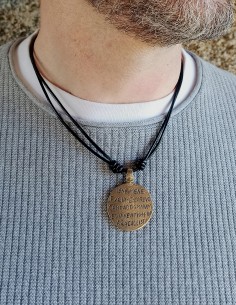
Last items in stock Rome Roman slave collar 2 CB-94 (2) €23.59 Archaeological reproduction of a roman slave collar from the The British Museum. Inscription: TENE ME NE FUGIA(m) ET REVO CA ME AD DOM(i)NUM EVVIVENTIUM IN AR(e)A CALLISTI. "Stop me so as not to flee, and return me to my lord Eviventium in the temple of Callixtus" Made of bronze (cord included). Measures: Heigh 4.4cm Diameter 3.3cm View
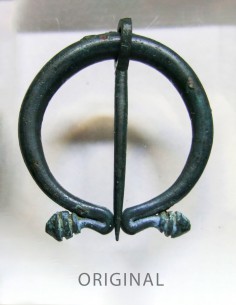
Rome Small Omega fibula F-199 (11) €12.88 Omega fibula replica. This type of fibula was very popular, used by Celts, Iberians, Romans, Vikings, Anglo-Saxons ... its good functionality makes it very attractive. it is great to wear in re-enactments or to fasten pashmina or embellish lapels. UNISEX. This replica has been made from an original piece belonging to the Carranque Site in Toledo (Spain) a... View
Rome Omega fibula F-201 (10) €18.54 Replica of omega fibula. Fíbula, word from Latin, fibula (needle). It is denominated to all type of metallic pieces used to unite or to hold some of the garments that composed the clothes. Piece made of bronze Measures: Heigh 5.2cm Width 4.7cm View
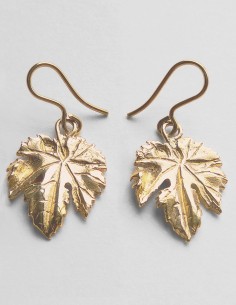
Available Greece-Phoenicians Vine leaves earrings 2 P-028 (5) €20.50 Grape leaves in Greek mythology symbolized prosperity and abundance. It was the chosen ornament for certain gods, the most prominent was Dionysus (Bacchus in roman mythology), who was adorned in each of his representations with large vine leaves Made of yellow bronze and the hooks of the earrings are in gold-plated sterling silver. View
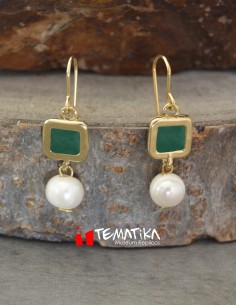
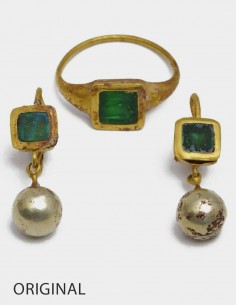
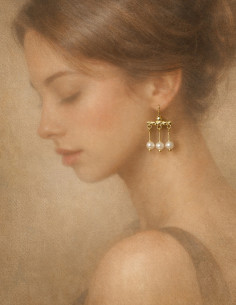
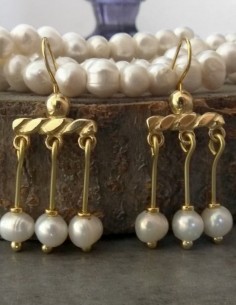
Available Rome Pendientes Clunia P-543 (17) €25.75 Roman earrings replica(originals made of gold) from the 1st century A.D., found in the Roman Villa of Clunia (Burgos), specifically in the female hot springs of Los Arcos II. Reproduction made in bronze with pearl, you can choose them in three finishes, yellow bronze, patinated bronze (blue-green) and bronze with red enamel. * IMPORTANT: All the hooks of... View
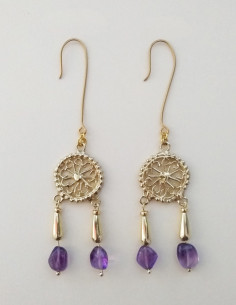
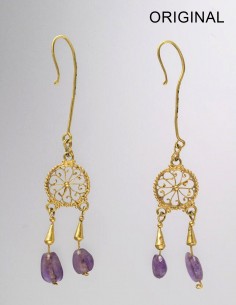
Rome Byzantine earrings P-547 (10) €37.08 Replica of a striking and elegant Roman earrings from the Byzantine period, the originals belong to the collection of the Royal Ontario Museum. The characteristics of the originals are: Material: Gold and amethysts Geography: Byzantine Empire, possibly Constantinople (present-day Istanbul), Turkey. Dating: 500-700 AD Period: Byzantine Replica made in... View
Out of stock. Shipping will be in 15-20 days Rome Octavius Augustus earrings P-580 (2) €24.21 First emperor of Rome, after defeating Marco Antonio and Cleopatra in Alexandria. Considered by many the greatest emperor for his policies, which extended the life of the empire and initiated the so-called Roman peace or Pax Augusta. Replica made in brass and pearl, hooks in gold plated sterling silver. View
Rome Julius Caesar earrings P-581 (2) €20.50 These coin earrings are a replica of a Julius Caesar denarius, dated approximately 43 BC. As a short summary of this important and controversial character: he was a Roman military and political leader of the late republican era and one of the most famous figures of ancient Rome, after winning the civil war that confronted him with the most conservative... View
Available Rome Amphora Earrings P-588 €26.26 If you're looking for an accessory that combines elegance and originality, we have the perfect earrings for you. Our Roman amphora-shaped earrings are a sophisticated and historic piece that will complement any look. These earrings are inspired by the amphoras found in Colonia Cesaraugusta, Zaragoza. In Ancient Rome, amphoras were used to transport... View
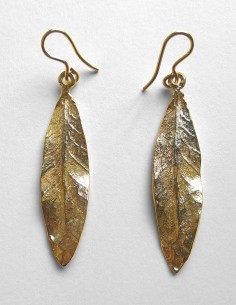
Greece-Phoenicians Olive leaf earrings P-592 (10) €23.18 Elegantly shaped pendant representing the olive leaf, so significant in the ancient world. According to Greek mythology, the olive tree has a divine origin. Olives were a food created by Athena / Minerva as a gift to humanity, so they also served as an offering to the gods. With the leaves they crowned their champions and with the oil anointed their... View
Greece-Phoenicians Olive leaf earrings 2 P-593 (2) €43.26 Earrings that represent the olive leafves. It consists of two leafves, a small one made of sterling silver, which is superimposed on a larger leaf made of brass. Giving the earring a contrast and shape that makes it different and sophisticated. The ear hook is made of sterling silver. In ancient times the olive was a fundamental product with multiple uses... Add to cart
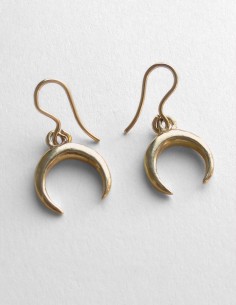
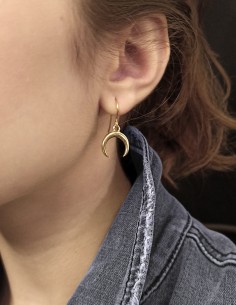
Available Rome Lunula earrings P-597 (6) €20.50 Earrings shaped like a crescent moon. In ancient Rome, the lunula (plural: lunulae) was a hanging amulet worn by girls and women until their wedding day. Its properties are related to fertility and healing, in addition to offering protection against the evil eye. Piece inspired by a Roman lunula from the 2nd century B.C. View